You do not need another checklist.
You need someone who helped
write the rules.
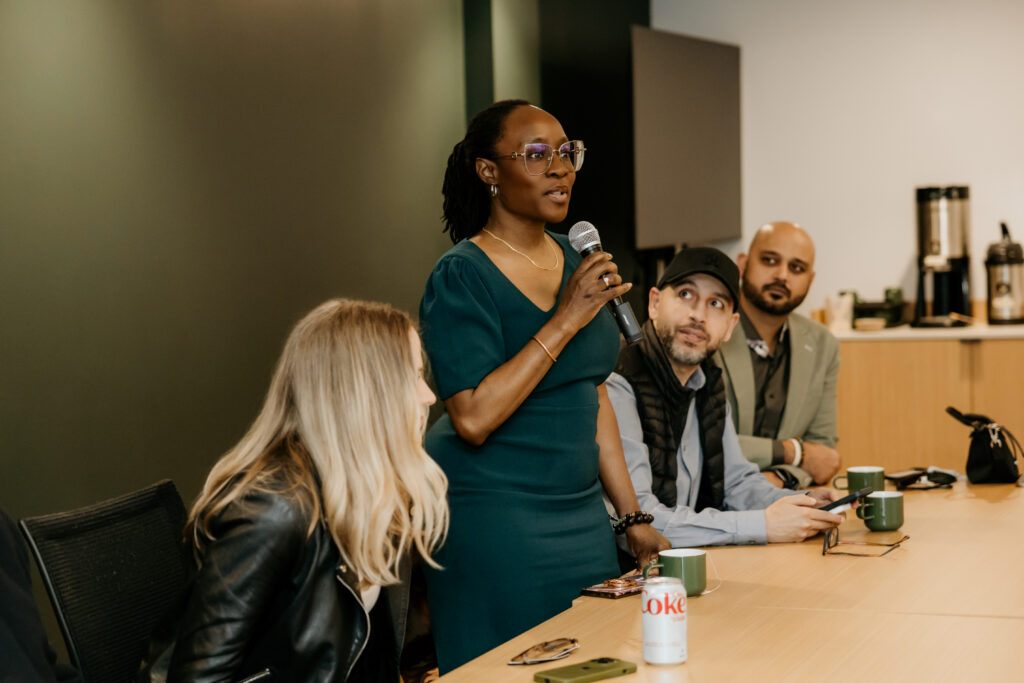
Nerissa Allen spent 20 years inside the Canadian Food Inspection Agency coordinating imports and writing national food policy. She now works with international food brands, Canadian importers, and food business organizations who cannot afford to get Canadian regulatory compliance wrong.
- National policy writing and import coordination
- Import compliance and enforcement experience
- Trusted by TFO Canada, BBABC, and food sector organizations nationwide
- Specialist in SFCR, PCP, and multi-agency import requirements
Canadian food regulation is more complex than anyone tells you.
Most food businesses find out what they did not know at the worst possible moment. When a shipment is stopped at the border. When a CFIA inspector arrives and the Preventive Control Plan is incomplete. When a recall happens and there is no documented plan to execute against.
The rules governing food safety, import compliance, licensing, traceability, and recall in Canada are not simple. They involve multiple government agencies that do not coordinate with each other. They change in response to disease outbreaks, quarantine risks, and policy shifts. And they apply differently depending on your product, your ingredients, your country of origin, and your business model.
Generic templates and online courses can tell you what the regulations say. They cannot tell you how they are applied, what inspectors actually look for, or where the gaps in your compliance are before they become enforcement actions.
That is the difference between information and intelligence.
Two ways in.
One standard of expertise.
Compliance Training for Food Business Cohorts
You run programs, accelerators, incubators, or cohorts serving food businesses. Your participants need foundational CFIA compliance knowledge delivered by someone with real federal regulatory authority. You manage the participants. Nerissa brings 20 years of CFIA experience into the room.
-
PCP Framework Workshop — 3 hours. Preventive Control Plan requirements and CFIA verification expectations.
-
Recall Plan Requirements Workshop — 3 hours. Mandatory recall plan components and annual simulation documentation.
-
Full Compliance Suite — Both workshops, one organizational partnership.
Flat fee per session. You fill the room. Nerissa delivers the expertise.
Strategic Market Entry Advisory
You are an international food brand trying to enter the Canadian market, or a Canadian importer sourcing internationally. You need to understand your compliance obligations before your product arrives at the border, not after. This is market entry architecture, not label review.
-
Import Compliance Intelligence — Multi-agency requirement mapping for your specific product and origin.
-
Market Entry Architecture — Strategic regulatory roadmap before your first shipment leaves port.
-
Regulatory Risk Assessment — Identifying compliance gaps at the organizational level before they become enforcement actions.
20-minute introductory call. No obligation. Straight answers from a federal insider.
Canadian food regulatory intelligence. Delivered to your inbox.
Import requirements shift. Agencies update enforcement priorities. Licensing rules change. Most food businesses and international brands find out too late. Subscribe to receive practical regulatory intelligence from someone who spent 20 years on the enforcement side of the Canadian food system.
No generic compliance summaries. No government website rephrasing. Insider knowledge in plain language, when it matters.
The rules just changed.
The question is whether your business
is ready for what comes next.
The SFCR now requires food businesses to have an enacted Preventive Control Plan before a licence is granted. Import requirements shift in response to disease outbreaks, quarantine events, and policy changes that no online course or AI tool tracks in real time. The compliance landscape is not static and the cost of being behind it is real.
Nerissa Allen is one of the few people in Canada who has sat on both sides of that equation. As a federal insider who coordinated imports and wrote national policy, and now as an advisor who helps food businesses and international brands navigate what that policy means in practice, today and as it continues to evolve.