Beyond the Border: 5 Things U.S. Exporters Forget When Entering the Canadian Market

So you've conquered the U.S. market, and now Canada is calling. Makes sense, it's right there, they speak English (mostly), and there are 40 million consumers ready to discover your product.
What could possibly go wrong?
Spoiler alert: a lot.
I've watched countless U.S. food businesses approach the Canadian border with confidence, only to get tripped up by regulatory details they never saw coming. The thing is, these aren't obscure technicalities buried in some dusty policy manual. They're predictable, avoidable missteps that happen over and over again.
Let's talk about the five things U.S. exporters consistently forget, and how to make sure you're not one of them.
1. Bilingual Labeling: It's the Law, Not a Courtesy
Here's the reality check nobody wants to hear: your beautifully designed, FDA-compliant label is illegal in Canada.
Canada has two official languages, and the Consumer Packaging and Labelling Act doesn't care how much you spent on your packaging design. If it's not in both English and French, it's not hitting Canadian shelves. Period.
This isn't a "nice to have" or a regional preference. It's federal law that applies coast to coast, not just in Quebec.
What needs to be bilingual?
- Product name and net quantity
- Ingredient list
- Allergen declarations
- Storage instructions
- Country of origin statements
The tricky part? It's not just about running your text through Google Translate. French Canadian terminology has specific requirements, and CFIA inspectors know the difference between proper regulatory French and something that reads like a confused tourist.
I've seen shipments held at the border over a single mistranslated allergen. Don't let that be your story.

2. SFCR/PCP Nuances: Your U.S. Food Safety Plan Needs a Canadian Translation
If you read our first post in this series, FDA vs. CFIA: Why Your U.S. Food Safety Plan Might Fail at the Canadian Border, you already know that FDA compliance doesn't equal CFIA compliance.
But let's dig deeper into the why.
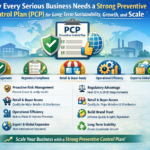
Canada's Safe Food for Canadians Regulations (SFCR) require a Preventive Control Plan (PCP) that looks similar to your HACCP plan on the surface. Same general concept: identify hazards, establish controls, verify they're working.
The devil, as always, is in the details.
Key differences that catch U.S. exporters off guard:
- Traceability requirements are more prescriptive under SFCR. You need to trace one step forward and one step back within 24 hours, not "as soon as reasonably possible."
- Complaint handling procedures must be documented as part of your PCP, not as a separate quality system.
- Recall procedures need to align with CFIA's specific templates and reporting timelines.
Your U.S. food safety plan is a solid foundation. But it needs a Canadian "translation", not just linguistically, but regulatorily. This is where having someone who speaks both FDA and CFIA fluently becomes invaluable.
3. The Nutrition Facts Table: Spot the Differences Before CFIA Does
At first glance, the Canadian Nutrition Facts table looks almost identical to the U.S. version. Almost.
That "almost" has cost companies thousands in reprinting costs and delayed launches.
Here's what's different:
| Element | U.S. (FDA) | Canada (CFIA) |
|---|---|---|
| Serving size format | "Per 1 cup (240mL)" | "Per 1 cup (250 mL)" , note the space |
| % Daily Value header | "% Daily Value*" | "% Daily Value / % valeur quotidienne" |
| Core nutrients | 15 required | 13 required (different list) |
| Bilingual requirement | No | Yes, always |
| Sugar declaration | "Includes X g Added Sugars" | "Sugars / Sucres" (no added sugars line) |
And here's the kicker: the Daily Values themselves are calculated differently. Vitamin D, calcium, iron, potassium, all have different reference amounts. You can't just slap a bilingual header on your U.S. NFT and call it a day.
The formatting rules are equally unforgiving. Font sizes, line spacing, border requirements, CFIA has specific guidance that diverges from FDA's format in subtle but significant ways.
Pro tip: If you're planning to use one label for both markets, you'll need a dual-format NFT that satisfies both regulatory bodies. It's possible, but it requires careful planning.

4. Non-Resident Importer (NRI) Status: You Need a Canadian Regulatory Liaison
Here's something that surprises a lot of U.S. exporters: you can't just ship products into Canada and hope for the best. Someone in Canada needs to be accountable for your imports.
Under SFCR, if you don't have a physical presence in Canada, you need to work with a Non-Resident Importer (NRI) or establish that status yourself with a Canadian agent.
What does this mean practically?
- A Canadian-based entity must hold the Safe Food for Canadians (SFC) licence for importing
- That entity is legally responsible for ensuring your products meet Canadian requirements
- They're the ones CFIA contacts if something goes wrong
Some U.S. companies try to skip this step, assuming their Canadian distributor will handle it. Sometimes they do. Sometimes they don't. And "sometimes" isn't a compliance strategy.
Having a proper NRI arrangement, or working with a regulatory consultant who can help you establish one, removes ambiguity and protects your brand from nasty surprises at the border.
5. Proactive Gap Analysis: Catch Issues Before the Border Does
Here's where I get excited, and yes, I realize that makes me a regulatory nerd, but hear me out.
The traditional approach to market entry is reactive: submit your products, cross your fingers, and deal with problems as they arise. It's stressful, expensive, and entirely avoidable.
The smarter approach? Proactive gap analysis.
Before your first shipment ever approaches a Canadian port of entry, you should know exactly where your compliance gaps are. Every single one of them.
This is where AI-powered tools are changing the game. Instead of manually comparing your labels, PCPs, and documentation against hundreds of pages of CFIA guidance, modern forensic scanning can flag discrepancies in minutes.
A proper gap analysis covers:
- Label compliance across all mandatory elements
- PCP alignment with SFCR requirements
- Traceability system adequacy
- Licensing and registration status
- Facility certification requirements (if applicable)
Think of it as a pre-flight checklist. Pilots don't skip it because they've flown before. Neither should you, just because you've successfully exported to other markets.
The Bottom Line
Entering the Canadian market isn't complicated: but it is different. The exporters who succeed are the ones who respect those differences and prepare accordingly.
The ones who struggle? They're the ones who assume that "close enough" will work.
It won't.
The good news is that these five oversights are entirely preventable. With the right preparation, the right documentation, and the right guidance, your Canadian market entry can be smooth, efficient, and profitable.
Ready to make sure you've got all five covered?
Book a Canada Market Entry Consultation and let's get your products border-ready( before you ever reach the border.)