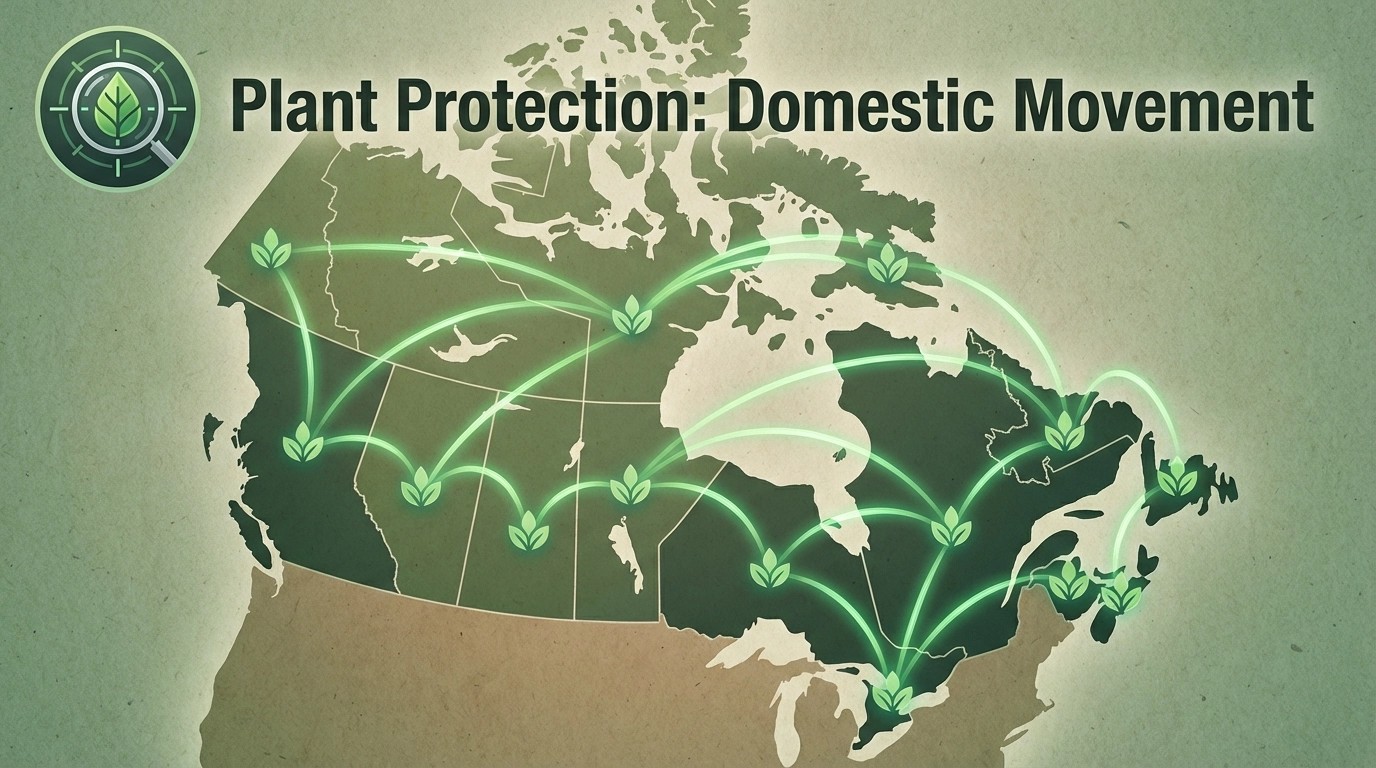
Plant Protection Regulations: Why domestic movement is changing.
![[HERO] Plant Protection Regulations: Why domestic movement is changing.](https://cdn.marblism.com/Yl4oG0lc-8T.webp)
If you've been moving plants, plant products, or soil across provincial lines without giving it much thought, it's time to pay closer attention. Canada's Plant Protection Regulations are undergoing significant changes, and they're reshaping how domestic movement works from coast to coast.
For years, compliance conversations focused almost exclusively on imports and exports. But here's the thing: the threats to Canada's plant health aren't just arriving at our borders anymore. They're already here, and they're spreading. That's exactly why the Canadian Food Inspection Agency (CFIA) is tightening the reins on how plants move within our own country.
Let's break down what's happening, why it matters, and what you need to do to stay ahead of the curve.
Pests on the Move: The Driving Force Behind These Changes
The real catalyst behind these regulatory shifts? Invasive pests that don't respect provincial boundaries.
Take the Emerald Ash Borer, for example. This metallic green beetle, originally from Asia, has devastated millions of ash trees across Eastern Canada and is steadily moving westward. Once it establishes itself in a new area, the damage is swift and often irreversible. Entire urban forests have been lost, and the economic impact on municipalities, nurseries, and forestry operations has been staggering.

Then there's the Box Tree Moth, a more recent arrival that's threatening ornamental boxwood plants across the country. For nurseries and landscaping businesses, this pest represents a direct hit to inventory and revenue.
These aren't isolated incidents. Climate change is extending the range of many pests, allowing them to survive in regions that were previously too cold. Meanwhile, increased trade and movement of plant materials are giving them new pathways to spread.
The bottom line? What moves between provinces can carry hidden threats. And that's precisely why domestic movement is now under the regulatory microscope.
Compliance Isn't Just for Exporters Anymore
Here's a reality check that catches many businesses off guard: domestic movement restrictions are just as serious as import regulations.
For too long, the assumption has been that if you're not shipping internationally, you don't need to worry about compliance. That assumption is now dangerously outdated.
The CFIA has recognized that scattered, outdated regulations were creating confusion and leaving gaps in plant protection. Previously, domestic movement prohibitions and restrictions were buried across multiple schedules within the Plant Protection Regulations. Some of these requirements had become obsolete, yet businesses were still technically required to comply with them, sometimes obtaining movement certificates for risks that science no longer supported.
The solution? A major consolidation effort.
The CFIA has now combined all domestic movement prohibitions and restrictions into a single, centralized document incorporated by reference (IBR). This approach offers several advantages:
- Faster updates: The agency can now respond to emerging plant health risks without waiting for lengthy regulatory amendments.
- Clearer requirements: Stakeholders have one place to check for current domestic movement rules.
- Reduced burden: Outdated requirements that no longer reflect current science can be removed more efficiently.
This isn't just bureaucratic housekeeping. It's a fundamental shift toward regulatory agility, and it means the rules you're following today might change faster than you expect.

The Paperless Shift: Digital Movement Certificates Are Coming
If you've been dealing with paper-based movement certificates, prepare for a significant change. The CFIA is actively moving toward digital certification systems for domestic movement.
This aligns with broader government initiatives to modernize regulatory processes. We've already seen this trend in food safety and livestock traceability, and plant protection is following suit.
What does this mean in practical terms?
- Electronic documentation will replace paper certificates for many domestic movement requirements.
- Real-time tracking of plant material movement may become standard practice.
- Integration with existing systems like the Automated Import Reference System (AIRS) could streamline compliance for businesses already navigating import regulations.
For businesses that have resisted digital adoption, this shift represents a clear signal: the paper era is ending. Those who embrace digital tools now will have a significant advantage when these changes fully roll out.
If you're looking to get ahead on digital readiness, you might find our insights on AI integrations for food businesses relevant. While focused on food, the principles of digital compliance apply broadly across CFIA-regulated sectors.
What This Means for Nurseries, Greenhouses, and Forestry Operations
Let's get specific about who's most affected by these changes.
Nurseries and Garden Centers
If you're selling or shipping live plants across provincial lines, you need to be aware of:
- Specific pest-related movement restrictions that may apply to your inventory
- Requirements for inspections or certifications before shipping certain species
- Documentation that must accompany shipments
The good news? The consolidated IBR document makes it easier to find these requirements in one place. The challenge? You need to check it regularly, because updates can happen quickly.
Greenhouses
Even controlled-environment operations aren't exempt. Pests can hitch rides on propagation material, growing media, or equipment. If you're sourcing plant material from other provinces, you need to verify that it meets current domestic movement requirements.

Forestry and Wood Products
The movement of firewood, logs, and wood products is heavily regulated in areas affected by pests like the Emerald Ash Borer. Compliance isn't optional: it's essential for protecting Canada's forest resources and avoiding significant penalties.
Landscaping and Horticulture Businesses
If you're transporting plants for installation projects across provincial boundaries, you're subject to the same domestic movement requirements as nurseries. Ignorance isn't a defense if you're found moving restricted materials.
The Cost of Non-Compliance
Let's be direct: failing to comply with domestic movement requirements can have serious consequences.
- Financial penalties for moving restricted plant materials without proper documentation
- Quarantine orders that can halt your business operations
- Reputational damage within your industry and with regulators
- Contribution to pest spread that harms the broader agricultural and forestry sectors
The CFIA's shift toward faster regulatory updates means the agency is also better equipped to respond quickly to violations. The days of outdated rules sitting unenforced are numbered.
Your Actionable Checklist: Staying Compliant
Here's what you should do right now to ensure you're on the right side of these evolving regulations:
Bookmark the CFIA's domestic movement requirements page. This is your go-to resource for current prohibitions and restrictions. Check it before any interprovincial shipment.
Familiarize yourself with AIRS. The Automated Import Reference System isn't just for imports. Understanding how CFIA organizes regulatory requirements will help you navigate domestic rules more effectively.
Audit your current practices. Are you moving any plant materials, soil, or wood products across provincial lines? Identify every potential compliance touchpoint.
Train your team. Everyone involved in shipping, receiving, or transporting plant materials should understand the basics of domestic movement requirements.
Embrace digital documentation. Start transitioning away from paper-based systems now. When digital movement certificates become standard, you'll be ready.
Stay informed. Subscribe to CFIA updates and industry newsletters. Regulatory changes can happen quickly under the new IBR system.

Looking Ahead: A More Agile Regulatory Future
The changes to Canada's Plant Protection Regulations represent a broader trend toward responsive, science-based regulation. The CFIA's ability to update domestic movement controls quickly means the regulatory landscape will be more dynamic than ever.
For businesses, this demands a shift in mindset. Compliance isn't a one-time box to check: it's an ongoing commitment to staying informed and adapting to new requirements.
The pests driving these changes aren't slowing down. Neither should your compliance efforts.
If you're navigating complex regulatory requirements and need strategic guidance, let's connect. Understanding the regulatory landscape is the first step toward protecting your business and contributing to Canada's plant health security.