Your Quick-Start Guide to CFIA Inspection Readiness: Do This First
![[HERO] Your Quick-Start Guide to CFIA Inspection Readiness: Do This First](https://cdn.marblism.com/-hnZUWVtPJN.webp)
That email just landed in your inbox. The Canadian Food Inspection Agency wants to schedule an inspection. Your stomach drops. You know your operation is solid: but are you ready?
Here's the truth: CFIA inspections don't have to be stressful. With the right preparation, they become an opportunity to demonstrate your commitment to food safety and regulatory excellence. But there's a catch. The inspection landscape is shifting, and if you're still relying on paper binders and filing cabinets, you're already behind.
Let me walk you through exactly what to do: starting with the single most important step that most food businesses overlook entirely.
The Inspection Landscape Has Changed
CFIA inspections aren't what they were five years ago. Inspectors are increasingly leveraging digital tools, expecting faster access to records, and evaluating not just what you document but how you document it.
The Safe Food for Canadians Regulations (SFCR) set the compliance framework, but the execution of inspections has evolved. Inspectors will review documents, observe your operations, conduct staff interviews, and take measurements to verify compliance. They're looking for patterns, consistency, and: most importantly: accessibility of information.
This shift means one thing: digital readiness is no longer optional.

Do This First: Your Digital Readiness Assessment
Before you reorganize a single binder or update a temperature log, stop. The very first action you should take is conducting a Digital Readiness Assessment of your entire operation.
Why? Because CFIA's digital-first approach means inspectors expect to see:
- Quickly retrievable records (not dusty folders in the back office)
- Consistent digital timestamps on monitoring activities
- Organized, searchable documentation that proves your systems work
A Digital Readiness Assessment evaluates your current state across three critical areas:
| Assessment Area | Key Questions |
|---|---|
| Record-Keeping Systems | Are your logs digital? Can you pull six months of temperature records in under five minutes? |
| Document Accessibility | Can multiple team members access critical files? Is there a backup system? |
| Process Integration | Are your monitoring activities automatically captured, or manually transcribed after the fact? |
If you can't answer "yes" confidently to these questions, your Digital Readiness Assessment just identified your first priority.
This isn't about buying expensive software. It's about understanding where your gaps are before an inspector finds them. Many food businesses I work with discover that their biggest vulnerability isn't food safety knowledge: it's information retrieval.
Your Preventive Control Plan: The Non-Negotiable Foundation
If you're trading interprovincially or exporting, you already know you need a Preventive Control Plan (PCP). But having a PCP and having an inspection-ready PCP are two very different things.
Your PCP must comprehensively cover:
- Hazard identification specific to your products and processes
- Preventive controls that address each identified hazard
- Monitoring procedures with clear frequencies and responsibilities
- Verification protocols proving your controls actually work
- Corrective action procedures for when things go wrong
Here's where digital record-keeping becomes critical. Your PCP isn't a static document: it's a living system. Inspectors will cross-reference your written plan against your actual records. They're looking for alignment.
Pro tip: Every monitoring activity in your PCP should have a corresponding digital record trail. If your PCP says you check cooler temperatures twice daily, your digital logs better show exactly that: with timestamps, employee identification, and any corrective actions taken.

The Documentation Checklist You Can't Ignore
When an inspector arrives, they'll verify permits immediately. But the documentation review goes far deeper. Here's your critical checklist:
Permits and Licenses
- Health operating permit from your regional health authority
- CFIA licence (if trading interprovincially or exporting)
- Any provincial-specific permits for your operation type
Operational Records
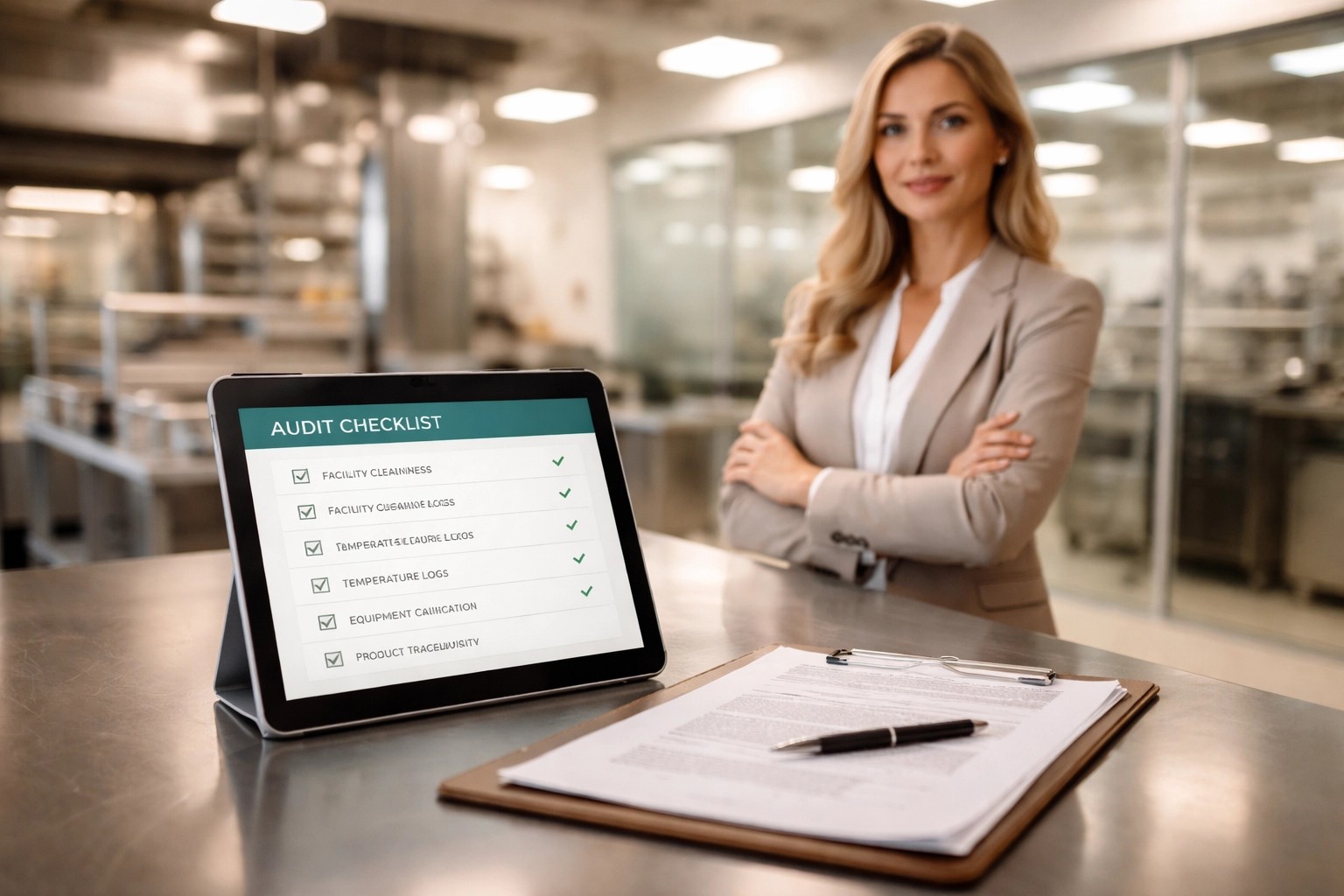
- Temperature logs (minimum twice daily: digital timestamps preferred)
- Cleaning and sanitation schedules with completion records
- Pest control documentation and service reports
- Equipment maintenance logs
- Supplier verification records and receipts
Training Documentation
- Food Handler Certifications for qualified staff
- Training records showing ongoing food safety education
- Documentation of any corrective training following incidents
Your PCP Package
- Current Preventive Control Plan
- Hazard analysis documentation
- Monitoring forms and completed records
- Verification activity logs
- Corrective action records
The key word here is organized. An inspector shouldn't have to wait while you search through files. Your documentation system: digital or otherwise: should allow you to retrieve any record within minutes.
Staff Certification: The Human Element
At least one team member on every shift must hold a valid Food Handler Certification. This is non-negotiable in most provinces, and inspectors verify it immediately.
But certification is just the baseline. Inspectors will conduct staff interviews to assess:
- Understanding of food safety principles
- Knowledge of your specific PCP and their role in it
- Awareness of monitoring responsibilities
- Understanding of corrective action procedures
What does this mean for you? Your team needs to know your systems, not just food safety theory. Regular training sessions that walk through your actual PCP, your actual monitoring procedures, and your actual corrective action protocols make the difference between confident staff interviews and nervous fumbling.

Run a Mock Self-Inspection
Before the real inspection, become your own inspector. Walk through your facility with fresh eyes and a critical mindset.
Your mock inspection should cover:
- Facility conditions – Check for any obvious maintenance issues, cleanliness concerns, or equipment problems
- Temperature verification – Spot-check coolers, freezers, and hot-holding equipment against your logged records
- Documentation review – Pull random records from the past six months and verify they're complete and accessible
- Staff readiness – Quiz team members on their monitoring responsibilities
- PCP alignment – Cross-reference your written procedures against what's actually happening on the floor
Document your findings. Fix any issues immediately. This exercise alone can prevent most inspection surprises.
The Digital Advantage: Why It Matters Now
Let me be direct: the food businesses thriving in today's regulatory environment have embraced digital transformation. Not because it's trendy, but because it works.
Digital record-keeping provides:
- Automatic timestamps that prove when monitoring occurred
- Searchable archives that make retrieval instantaneous
- Trend analysis that helps you identify problems before inspectors do
- Backup systems that protect against data loss
- Remote accessibility so records are available when and where you need them
This doesn't mean you need a six-figure software investment. Many operations start with simple digital solutions: cloud-based spreadsheets, dedicated apps, or hybrid systems that digitize manual processes.
The goal is getting your Digital Readiness Assessment completed first, then building solutions that address your specific gaps.
Your Next Step
CFIA inspection readiness isn't about perfection: it's about demonstrable systems that prove your commitment to food safety. When you can show an inspector exactly how you identify hazards, monitor controls, verify effectiveness, and correct problems, the inspection becomes a validation of your hard work rather than a source of anxiety.
Start with your Digital Readiness Assessment. Understand where your documentation systems need strengthening. Then systematically address each area: your PCP, your records, your staff training, and your verification activities.
If navigating these requirements feels overwhelming, or if you want expert guidance on building inspection-ready systems, I'm here to help. Together, we'll turn regulatory compliance from a burden into a competitive advantage.
Because when that inspection email arrives, you should feel confident( not concerned.)