Tariffs, Trade Wars, and Your Food Exports: How to Protect Your Canada Strategy Right Now
![[HERO] Tariffs, Trade Wars, and Your Food Exports: How to Protect Your Canada Strategy Right Now](https://cdn.marblism.com/BDrwt58NVqr.webp)
If you're in the Canadian food export business right now, you're probably watching the news with a mix of anxiety and caffeine. Tariffs flying in from multiple directions. Trade negotiations that seem to shift weekly. And your carefully built export strategy? It's feeling a little shakier than it did six months ago.
Here's the truth: the trade landscape has fundamentally changed, and the businesses that adapt quickly will come out stronger. Those that wait and hope for things to "go back to normal" are going to get squeezed.
Let me break down what's actually happening, what it means for your bottom line, and, most importantly, what you can do about it right now.
The Two-Front Trade Pressure Facing Canadian Food Exporters
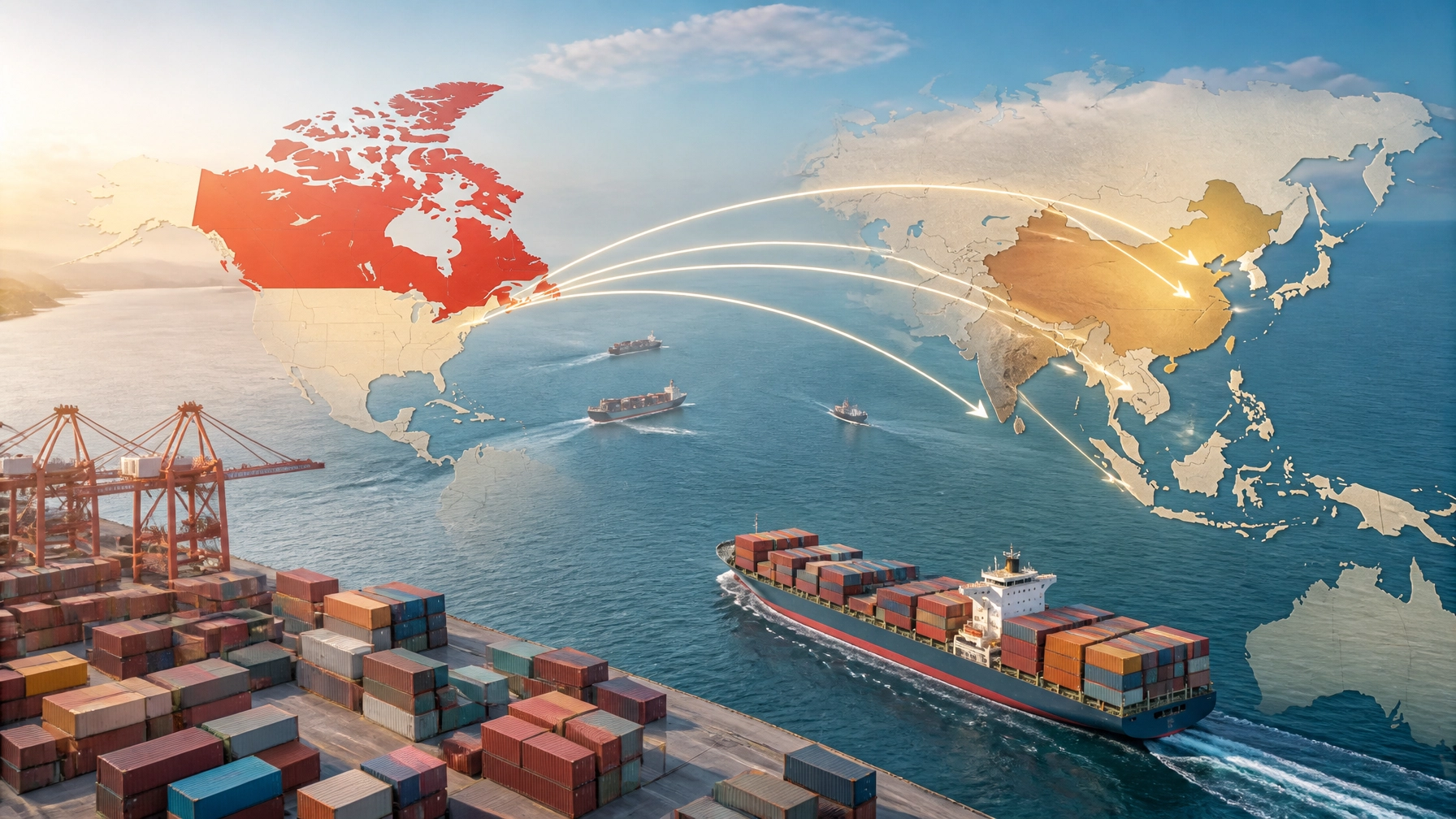
Canada's food and beverage sector is caught in an uncomfortable position. We're facing tariff pressures from both our largest trading partner (the United States) and a critical growth market (China) simultaneously.
Let's put some numbers to this:
- 80% of Canada's $58.4 billion in domestic processed food exports go to the U.S.
- Before the recent agreement, China had slapped 75.8% anti-dumping duties on Canadian canola seed
- Canola oil, canola meal, and peas faced 100% tariffs from China
- Canadian seafood was hit with 25% tariffs
That's not a small headache. That's an existential threat to entire supply chains.

The Canada-China Agreement: A Lifeline for Agricultural Exports
On January 16, 2026, Canada announced a preliminary agreement with China that's reshaping the export landscape. If you're in canola, seafood, or livestock genetics, pay attention, this directly affects your 2026 planning.
Here's what's changing:
| Product | Previous Tariff | New Tariff | Effective Date |
|---|---|---|---|
| Canola seeds | 84% | ~15% | March 1, 2026 |
| Canola meal | 100% | 0% | March 1, 2026 |
| Lobsters | 100% | 0% | Through end of 2026 |
| Peas | 100% | 0% | Through end of 2026 |
| Crabs | 25% | 0% | Through end of 2026 |
This isn't a small adjustment. The canola market alone represents $4 billion annually. Add in the $2.6 billion in other agricultural goods affected, and we're talking about a significant reopening of market access.
China has also committed to accelerating the resumption of Canadian beef, pet food, and animal genetics exports, sectors that have been locked out or heavily restricted for years.
But What About the U.S. Tariff Problem?
Here's where it gets complicated. While we're making progress with China, the U.S. tariff situation remains volatile.
The Canadian government implemented temporary tariff remission measures for goods imported from the U.S. that are used in manufacturing, food processing, and agricultural production. These measures were initially set to expire on January 31, 2026, though extensions are being discussed.
The intent? Give businesses breathing room to:
- Adjust supply chains
- Find domestic alternatives
- Reduce dependency on U.S.-sourced inputs
But "breathing room" isn't a long-term strategy. If you're heavily reliant on U.S. inputs or the U.S. market for your exports, you need to be building contingency plans now.

Five Strategic Moves to Protect Your Export Business
I've worked with food businesses navigating regulatory and trade challenges for over 30 years. Here's what I'm telling my clients right now:
1. Audit Your Market Concentration
If more than 60% of your exports go to a single market, you're exposed. Full stop.
Take a hard look at your customer base and ask:
- What happens if tariffs increase 25% overnight?
- Do you have relationships in alternative markets?
- Are your products certified for entry into the EU, Asia-Pacific, or Middle Eastern markets?
Diversification isn't just good business sense anymore, it's survival strategy.
2. Understand the New China Opportunity
The tariff reductions coming in March 2026 create a window. But windows close.
Chinese buyers have been sourcing canola, pulses, and seafood from other suppliers during the tariff dispute. You'll need to actively rebuild those relationships, not assume they'll come back automatically.
Consider:
- Attending trade missions and food expos in China
- Working with trade commissioners to identify new buyers
- Reviewing your product positioning for the Chinese market
3. Map Your Supply Chain Vulnerabilities
Do you know exactly where your ingredients, packaging, and processing inputs come from? More importantly, do you know what tariffs apply to each of them?
I've seen businesses blindsided by tariffs on inputs they didn't even realize were U.S.-sourced. A full supply chain audit, with tariff exposure analysis, should be on your Q1 priority list.

4. Take Advantage of Remission Measures (While They Last)
If you're importing U.S. goods for manufacturing or processing, make sure you're actually claiming the tariff remissions available to you. These programs exist specifically to help businesses transition, but they require documentation and proactive claiming.
Talk to your customs broker. Review your import data. Don't leave money on the table.
5. Build Regulatory Agility Into Your Operations
Trade policy changes fast. The businesses that thrive are the ones that can pivot quickly, updating certifications, adjusting labeling, meeting new market requirements without months of delay.
This means:
- Maintaining up-to-date export certifications for multiple markets
- Having regulatory expertise on call (not just when crisis hits)
- Building compliance processes that can adapt to new requirements
If you're looking for support navigating these regulatory complexities, that's exactly what I help businesses do.
The Bigger Picture: Why Diversification Matters More Than Ever
Let me be direct: the era of assuming stable, predictable trade relationships is over.
The U.S.-Canada trading relationship, while still critically important, is no longer the rock-solid foundation it was for decades. And while the China agreement is good news, it came after years of damaging tariffs that cost Canadian exporters billions.
The lesson? Don't put all your eggs in one basket. Or one country.
Smart food exporters are:
- Building relationships in the EU (despite its regulatory complexity)
- Exploring CPTPP markets like Japan, Vietnam, and Australia
- Looking at emerging opportunities in the Middle East and Africa
Yes, each market has its own regulatory requirements. Yes, it's more work than shipping everything to the U.S. But it's also more resilient.

What Should You Do This Week?
Here's my challenge to you: take one concrete action this week to strengthen your trade position.
That might mean:
- Scheduling a meeting with your customs broker to review tariff exposure
- Reaching out to a trade commissioner about the China market reopening
- Auditing your top 10 products for market concentration risk
- Booking a consultation to discuss your specific situation
The businesses that will thrive through this period of trade volatility aren't the ones hoping for the best. They're the ones taking strategic action right now.
The Bottom Line
Trade wars create losers: but they also create opportunities for businesses that move strategically. The Canada-China agreement opening up billions in agricultural exports is proof that markets can reopen. But they reopen for exporters who are ready.
If you're feeling uncertain about how these changes affect your specific products, markets, or supply chains, I'm here to help. With three decades of experience navigating food industry regulations and trade complexities, I serve as an extension of your team: helping you turn regulatory challenges into competitive advantages.